- News
- UK
- Home News
Free-speech and rights activists warn of slide towards criminalising right to free assembly
Jane Dalton Wednesday 14 January 2026 15:45 GMT- Bookmark
- CommentsGo to comments
Bookmark popover
Removed from bookmarks
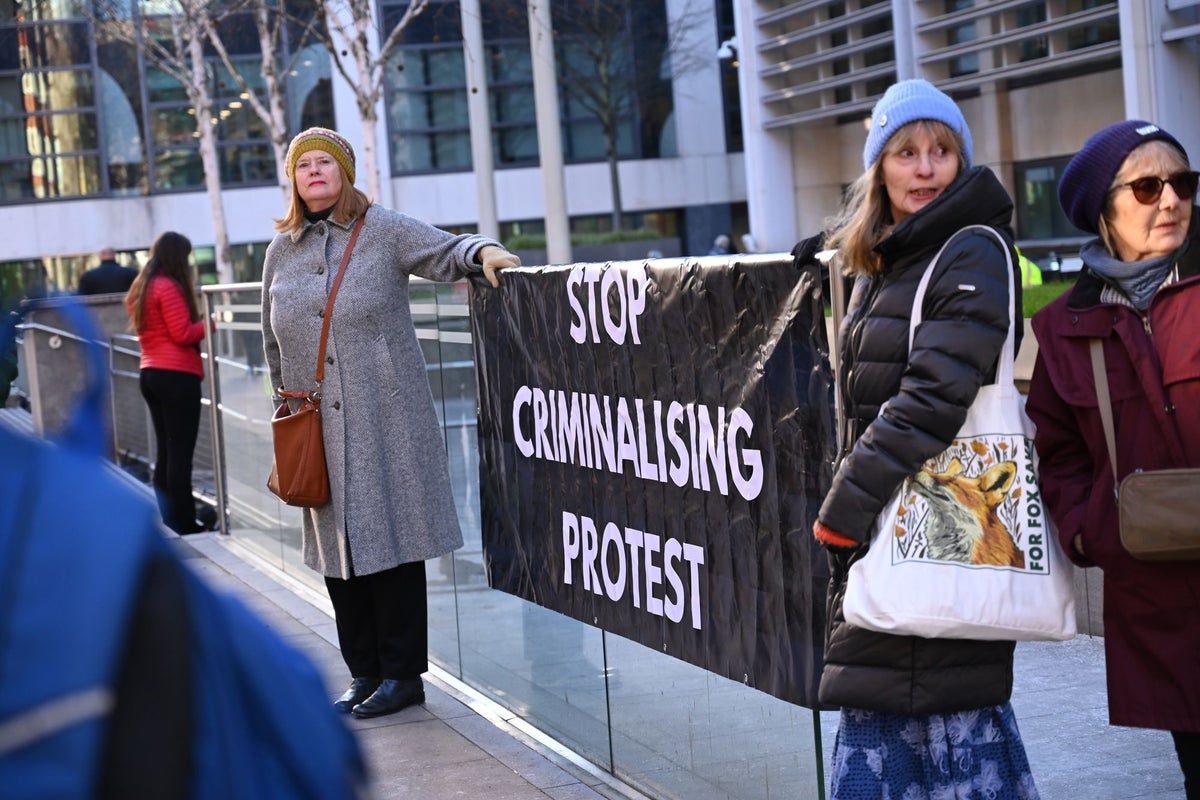
Close popover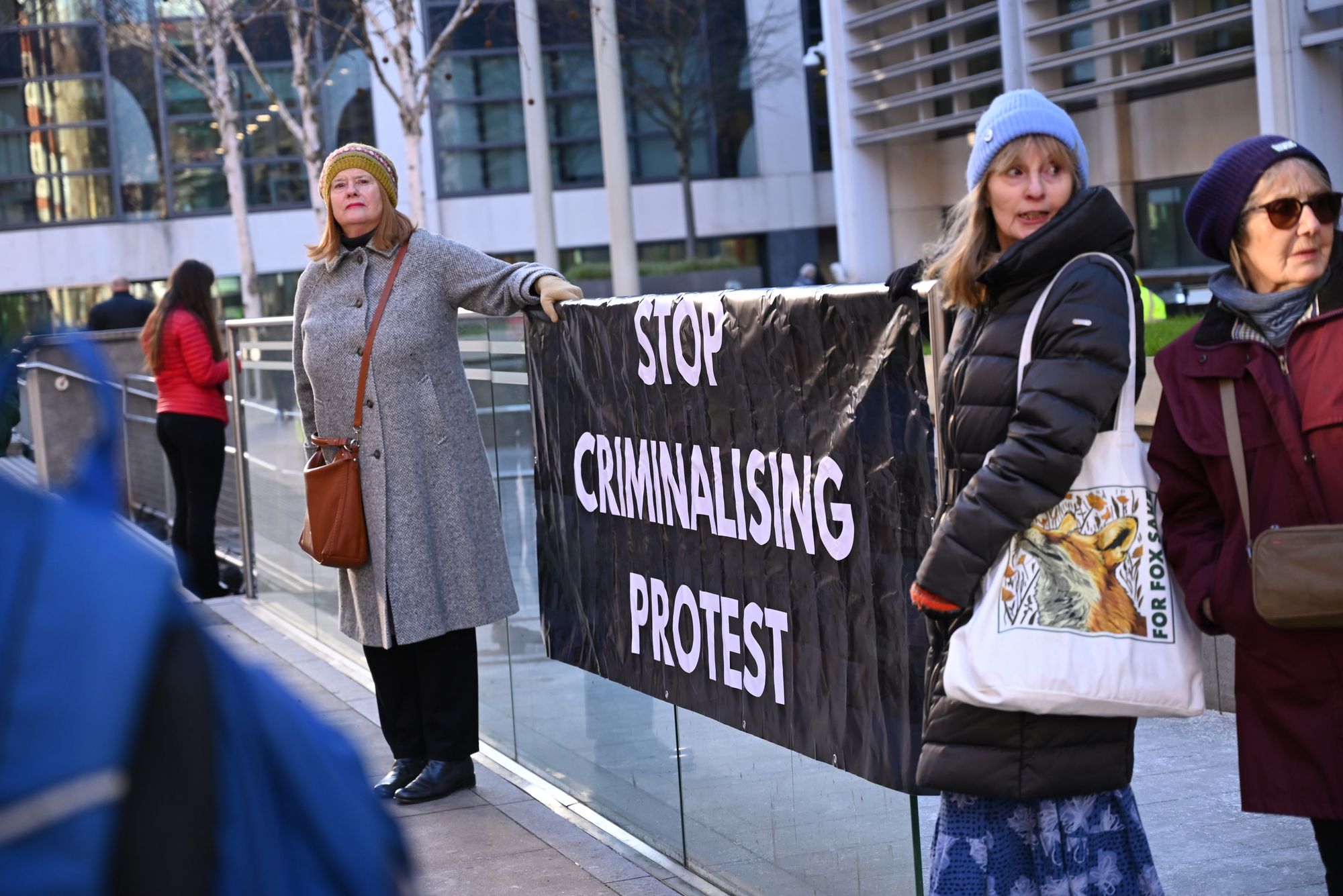 open image in galleryTwo women holding banner reading ‘Stop criminalising protest’ (Animal Rising )
Get the free Morning Headlines email for news from our reporters across the world
Sign up to our free Morning Headlines email
Sign up to our free Morning Headlines email
Email*SIGN UPI would like to be emailed about offers, events and updates from The Independent. Read our Privacy notice
Campaigners are accusing the government of a draconian crackdown by taking away the fundamental right to protest peacefully after it made non-violent demonstrations at animal-testing facilities a criminal offence.
Advocates for free speech and animal rights warned the move by home secretary Shabana Mahmood set a dangerous precedent towards clamping down on basic freedoms.
And activists staging round-the-clock vigils at a Cambridgeshire site breeding beagles for laboratory tests vowed to risk arrest to continue protesting.
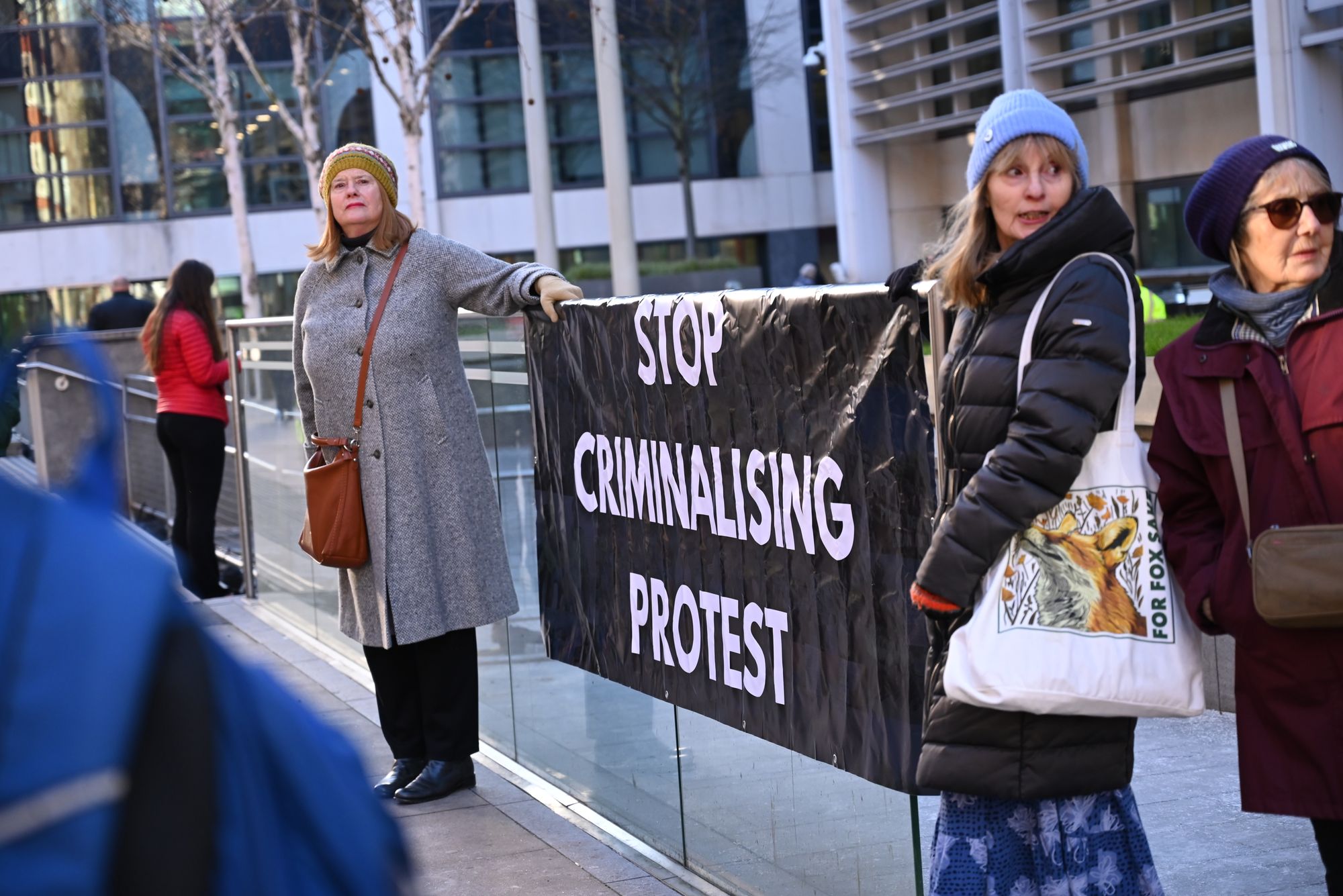 open image in galleryCampaigners say the right to peaceful protest is a fundamental principle of democracy (Animal Rising)
In a change to the law that was not part of a Bill before Parliament, Labour has amended the Public Order Act to categorise animal-testing facilities, including universities and laboratories, as “key infrastructure”, alongside airports, power stations and motorways.
Police will have stronger powers to stop protests, with penalties of up to a year in jail or an unlimited fine.
It means “Camp Beagle” demonstrators holding up placards outside a centre near Huntingdon that breeds dogs for laboratory testing could be prosecuted.
Anyone breaching the new ban may now face prison or an unlimited fine.
Cruelty Free International, which campaigns to end animal testing, branded the move “illiberal, draconian, unnecessary and almost certainly unlawful” and called on the Lords to reject it.
“This measure is an unjustified attack on democratic rights, and risks setting a dangerous precedent towards an ever-growing restriction of peaceful protest,” a spokesman said.
John Curtin, an organiser at Camp Beagle, told The Independent he and fellow members were prepared to be arrested.
“I’m not going to change my my actions one little bit, and we’ll just wait for the police to come along,” he said.
“They’re changing the law because we operate legally and peacefully.
“We’ve said the camp’s not going until this place is shut down. It’s business as usual. This is a disgusting act by the Labour Party who promised to get rid of animal testing. They’ll never live this down.”
Tens of thousands of people wrote to their MPs and members of the House of Lords to express their anger at the proposal before the vote.
But the government managed to pass the amendment by 301 votes to 110 after the Tories appeared to abstain on the issue, having previously tried to introduce the same measure before the election.
Nevertheless, 26 Labour MPs rebelled in another challenge to prime minister Sir Keir Starmer’s leadership.
One rebel MP pointed out: “We voted against this as the Labour Party when the Tories tried to do this in government; now our leadership is doing the same as the Tories.”
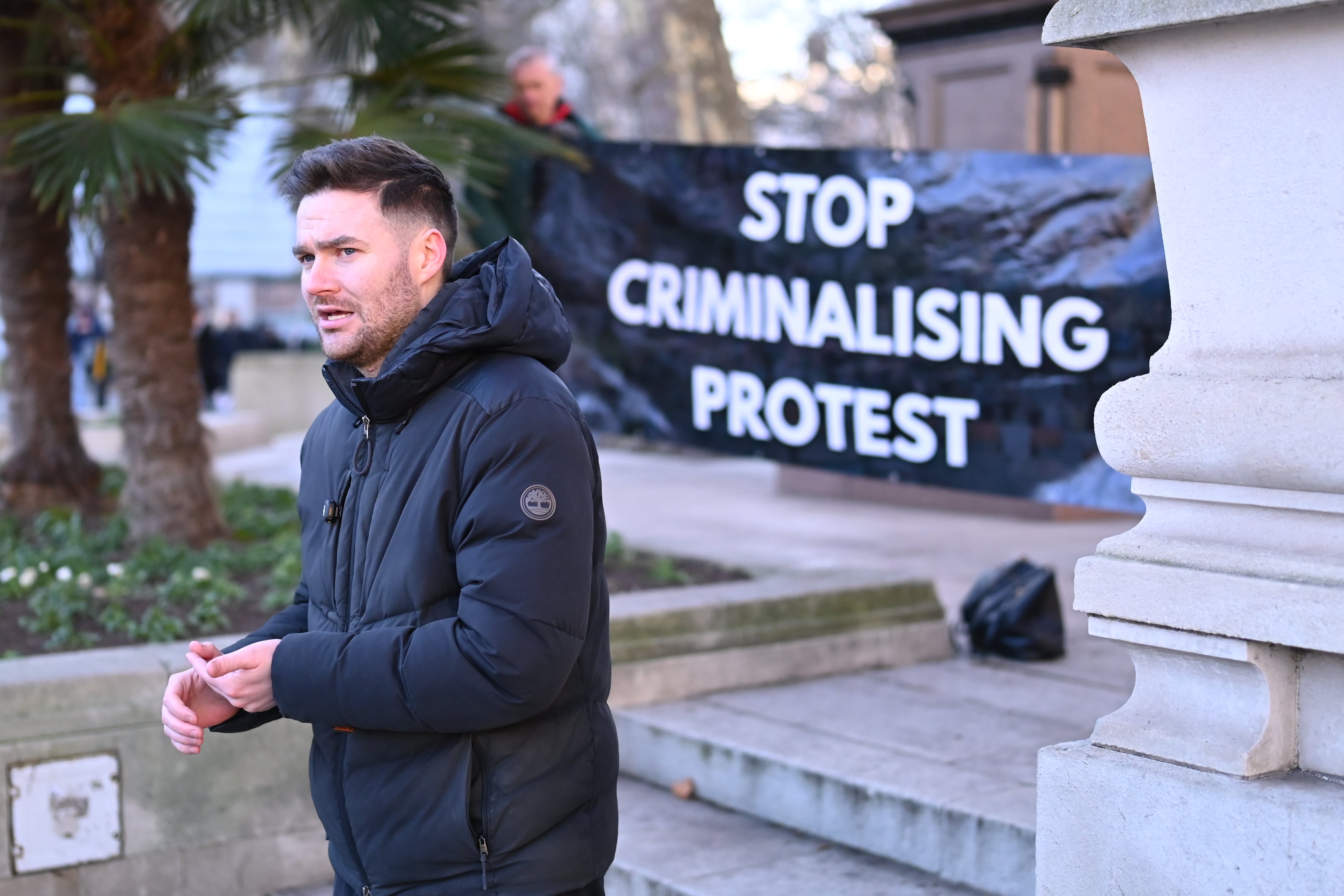 open image in galleryRob Pownall said peaceful protest had a ‘long and legitimate history in driving ethical and scientific progress’ (Animal Rising)
Celebrities including actor Amanda Abbington and television presenters Chris Packham and Kirsty Gallagher had spoken out against the crackdown. Lush Cosmetics and several law firms had also opposed the idea.
Many said the ban made a mockery of democratic principles.
Labour MP Neil Duncan-Jordan warned of a slide against “the right to free assembly that began under the last government”.
“Shielding the powerful from dissent only strengthens our opponents. By curtailing the right to protest, we risk laying the foundations for a more authoritarian and less democratic state. That’s not the job of the Labour Party,” he wrote.
The government has argued that interference with the life sciences sector risks weakening the UK’s ability to act swiftly in a medical crisis such as another pandemic.
Nathan McGovern, of the Animal Rising activism organisation, said “smuggling the legislation through without proper scrutiny or debate” was un-British.
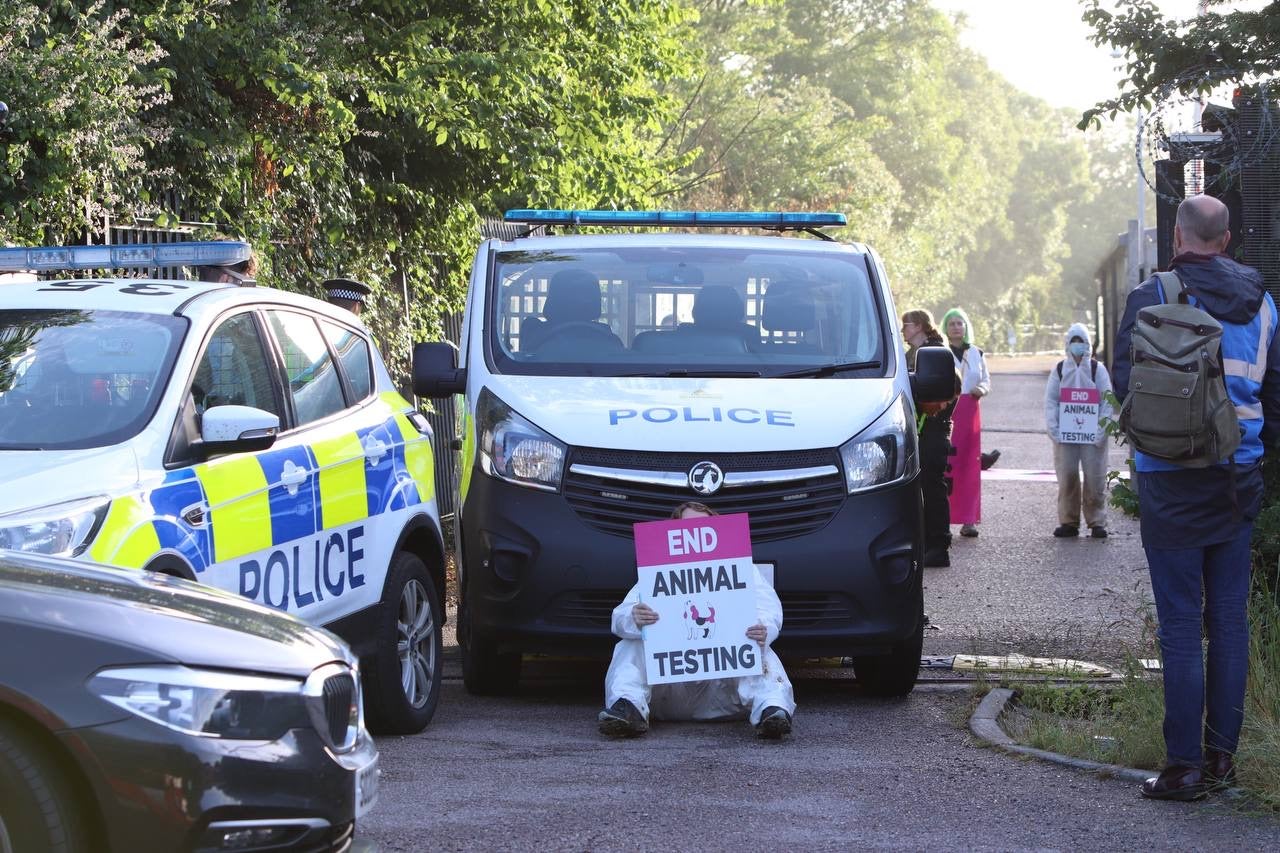 open image in gallery‘Today is a dark day for democracy,’ says founder of the Protect the Wild campaign organisation (Animal Rising)
“The home secretary’s actions are a mockery of the principles of honesty and integrity upon which our parliament was founded.
“Individuals have the right to oppose and speak out against industries such as life sciences without the fear of prison time.”
Rob Pownall, founder of the Protect the Wild campaign organisation, said: “Today is a dark day for democracy. This amendment stretches the definition of ‘key national infrastructure’ beyond recognition and does so for one reason only: to shield a controversial industry from scrutiny.
“Public opposition to animal testing is substantial, and peaceful protest has a long and legitimate history in driving ethical and scientific progress.
“This effectively removes people’s right to express moral, scientific, or ethical objections without fear of criminalisation.”
“Stretch the definition this far and it becomes meaningless and opens the door to abuse. Which industry will be next?”
Kate Salmon, of animal-welfare charity Naturewatch, branded the change an assault on democracy, saying: “This vote result is a kick in the teeth, but we thank the 110 MPs who stood up for freedom of speech and for what is right, which at the very least is democracy. Animal testing is not vital for this country's day-to-day running, and to try to define it as such is an attack on democracy.”
Just weeks ago, ministers published a strategy to phase out animal testing.
Members of Camp Beagle have maintained a 24-hour-a-day presence outside the MBR Acres beagle breeding facility near Huntingdon since June 2021 to draw attention to animal testing.
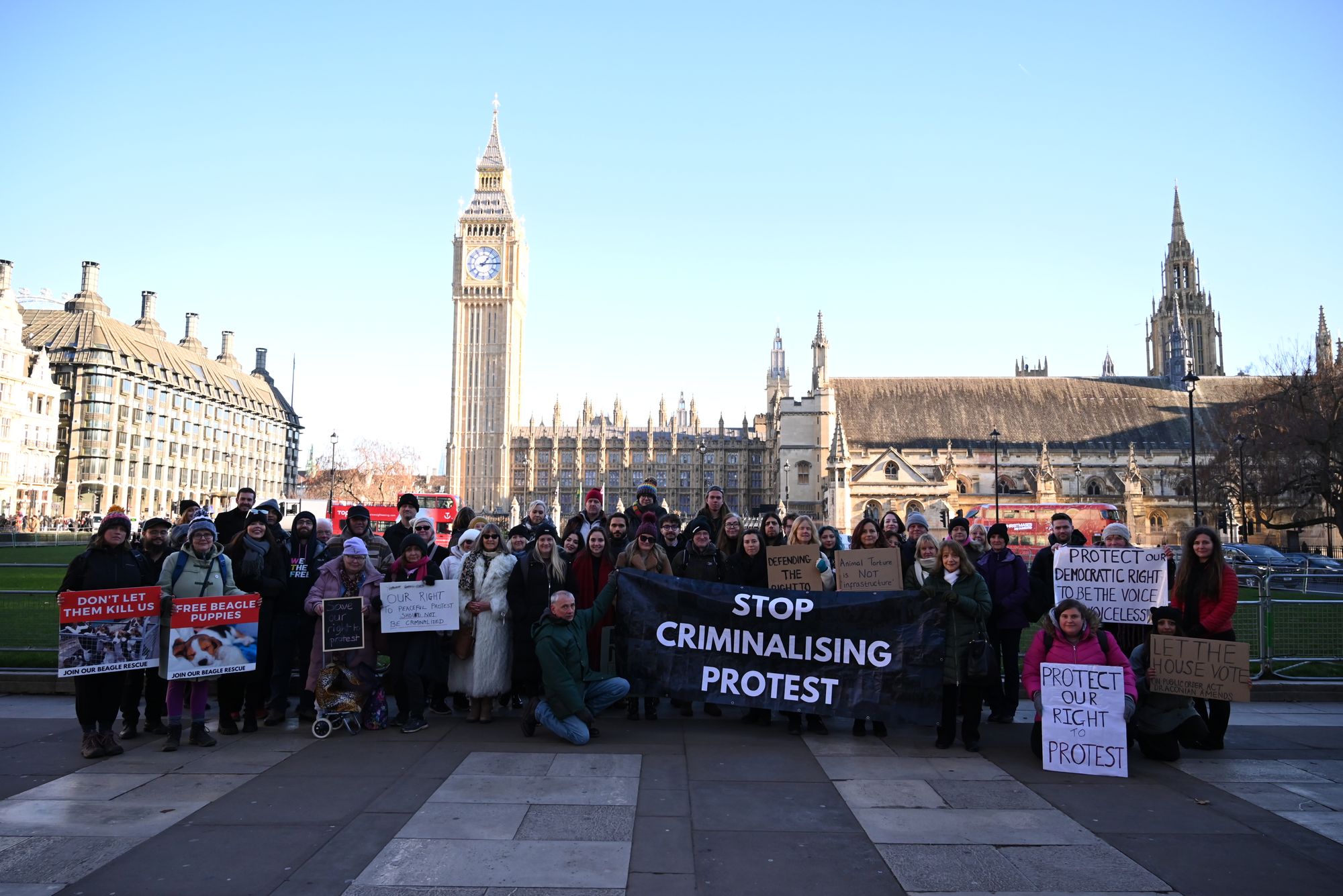 open image in galleryThousands of people wrote to their MPs to object to the change (Animal Rising)
Four defendants who broke into MBR Acres and took 18 beagle puppies were unanimously acquitted of burglary on Monday at Cambridge Crown Court.
A jury cleared Louisa Hillwood, Thomas Cusick, Kat Chan and Alan Guthrie after a seven-day trial in what campaigners dubbed a landmark case.
A Home Office spokesperson said: “Peaceful protest is a fundamental part of our democratic society; people in this country will always be able to freely express their views.
“This change is about providing police with powers to respond proportionately to disruptive protest activity that undermines our nation’s health.”
More about
animal welfareanimal testingProtestsDemonstrationsShabana MahmoodJoin our commenting forum
Join thought-provoking conversations, follow other Independent readers and see their replies
Comments