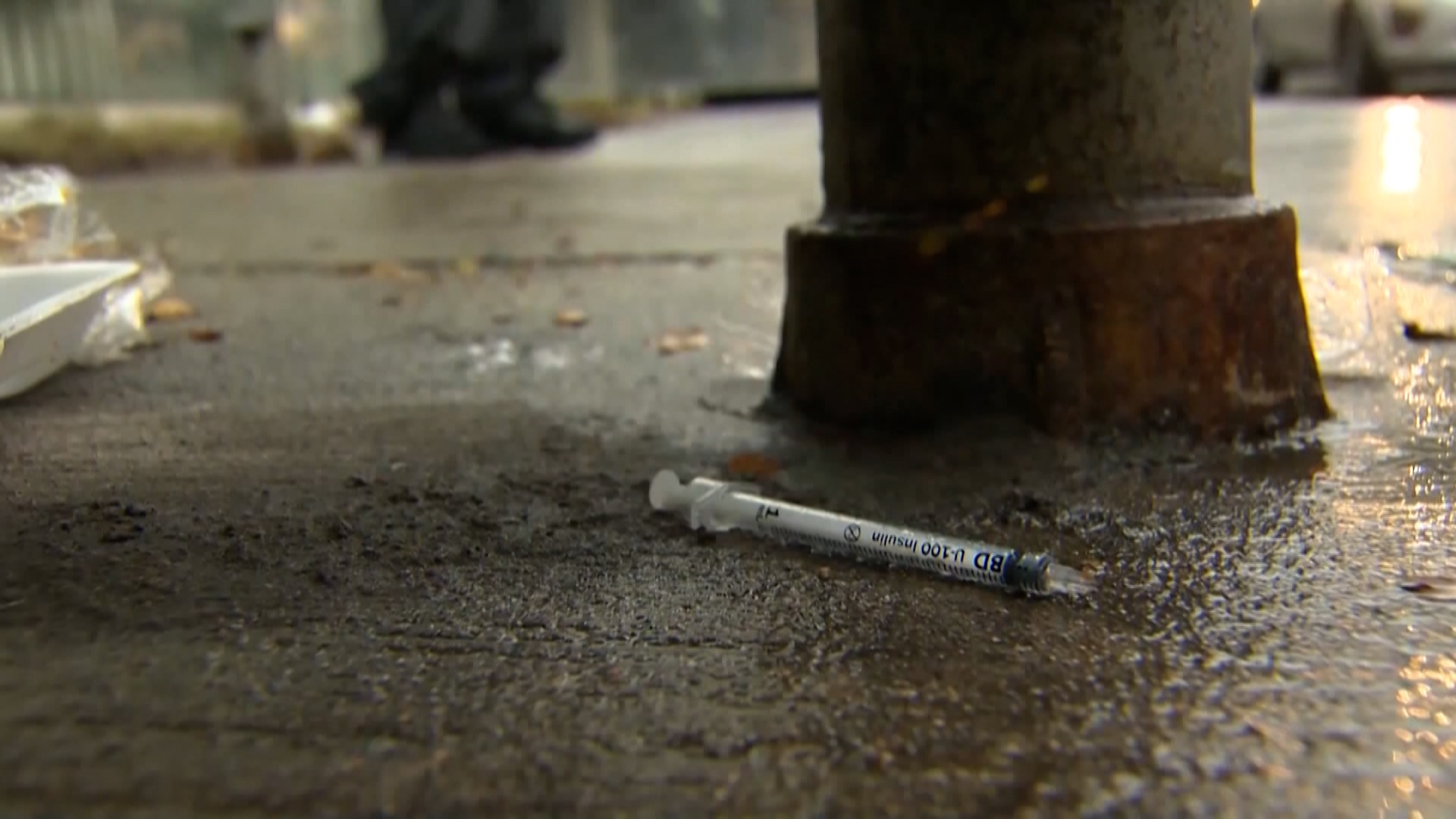
The B.C. government is ending its three-year drug decriminalization pilot program, but insists the work to end the drug crisis is not over.

“The toxic-drug crisis continues to take lives and cause tremendous pain across British Columbia,” Minister of Health Josie Osborne said in a statement.
“Families, communities, first responders and service providers are all feeling the impact. This is a deeply complex public-health emergency, and there is no single solution that can fix it. From the beginning, we have been determined to explore every option and use every tool available to save lives and support people who are struggling.”
The pilot program was launched in 2023 to make it easier for people struggling with addiction to reach out for help without fear of being criminalized.

Get weekly health news
Receive the latest medical news and health information delivered to you every Sunday. Sign up for weekly health newsletter Sign Up By providing your email address, you have read and agree to Global News' Terms and Conditions and Privacy Policy.Osborne said the program did not deliver the results they hoped for and that they are not asking the federal government to renew the exemption.
Story continues below advertisement“We remain focused on strengthening the approaches that are helping people get timely, appropriate care. Our priority is, and always has been, to make sure people can get help when and where they need it. We continue to believe that addiction is a health issue, not a criminal justice issue,” she said.
 1:59
Eby asked to clarify post-criminalization drug policy
Trending Now
1:59
Eby asked to clarify post-criminalization drug policy
Trending Now
-
![]() RCMP report says Bishnoi gang ‘acting on behalf of’ Indian government
RCMP report says Bishnoi gang ‘acting on behalf of’ Indian government
-
![]() Republican bill seeks to greenlight Trump’s takeover of Greenland
Republican bill seeks to greenlight Trump’s takeover of Greenland
 RCMP report says Bishnoi gang ‘acting on behalf of’ Indian government
 Republican bill seeks to greenlight Trump’s takeover of Greenland
Osborne said the province will be building a “more complete” system of mental health and addictions care, but did not provide any further details.
She said the response to the province’s public drug crisis must continue to evolve and adapt.
BC RCMP said they will continue to focus efforts on the people who make and traffic toxic drugs.
“With the end of the exemption, police officers can fully enforce and focus on the most serious offences within the Controlled Drugs and Substances Act,” Dwayne McDonald, deputy commissioner and commanding officer, BC RCMP, said in a statement.
Story continues below advertisement“Police will continue to apply a measured approach to our enforcement efforts, while upholding the safety and security of the communities we live and serve in.”
More on Politics More videos- François Legault resigns as Quebec’s premier with election approaching
- Mark Carney arrives in Beijing to kick off China trade mission
- Statistics Canada is slashing hundreds of jobs, including executives
- Why a U.S. attack on Greenland would mean the ‘end’ of NATO
-
![]() François Legault announces resignation as Quebec’s premier
François Legault announces resignation as Quebec’s premier
-
![]() Trump flips off Ford worker after ‘pedophile protector’ remark
Trump flips off Ford worker after ‘pedophile protector’ remark
-
![]() Edmonton mayor joins Global News Morning to talk about snow removal
Edmonton mayor joins Global News Morning to talk about snow removal
-
![]() Carney meets Xi in China under ‘new foreign policy’
Carney meets Xi in China under ‘new foreign policy’
 François Legault announces resignation as Quebec’s premier
 Trump flips off Ford worker after ‘pedophile protector’ remark
 Edmonton mayor joins Global News Morning to talk about snow removal
 Carney meets Xi in China under ‘new foreign policy’