- Voices
- The Independent View
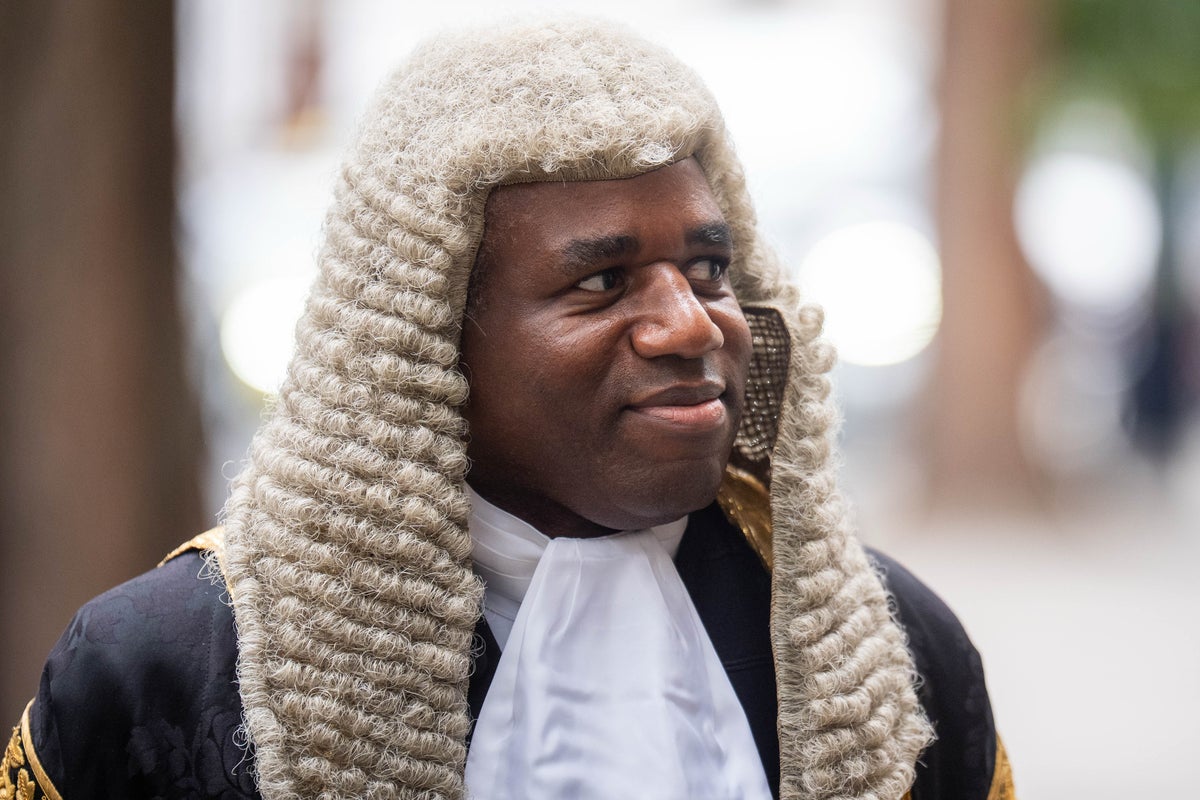
Editorial: David Lammy’s changes to trial by jury have concerned many in parliament, and any restrictions should only be accepted for as short a period as necessary to relieve the current prison crisis
Tuesday 10 March 2026 20:54 GMT- Bookmark
- CommentsGo to comments
Bookmark popover
Removed from bookmarks
Close popoverDavid Lammy announces 'swift courts' in justice reform
Sign up for our free Voices newsletter for expert opinion and columns
Sign up for our free weekly Voices newsletter for expert opinion and columns
Sign up to our free weekly Voices newsletter
Email*SIGN UPI would like to be emailed about offers, events and updates from The Independent. Read our Privacy notice
The facts, as lawyers say, are not in dispute. No one, not even the Conservative opposition that bequeathed the mess, seriously argues that all is well in Britain’s criminal justice system.
Our prisons are overcrowded, and the courts are overwhelmed by an appalling backlog of cases. Even with an emergency programme of early releases forced on Labour ministers when they took over in 2024, the situation remains deeply unsatisfactory – and, to anyone looking at it with any compassion, unsustainable. It is distressing to victims and the public alike, as well as dedicated legal professionals.
That is precisely why, in principle and with some essential amendments, the government should press on with the Courts and Tribunals Bill, which has now received its crucial second reading.
The bill, regrettably, includes further restrictions on the right to trial by jury – it has never been an absolute obligation, in any case. These should only be accepted for as short a period as necessary to relieve the current crisis.
To use the cliche, for once with some justification, the system is broken. The result is that far too many victims of crime have to wait for far too long to see justice done – and justice delayed is justice denied, as was established by Magna Carta.
Perversely, so bad have things become that one of the most powerful arguments in favour of restricting jury trials – a deeply unsatisfactory solution – is that, without action, many of those accused of serious crimes will never face a judge and jury at all. This is most poignantly so for rapes and other sexual assaults.
A group of Labour MPs, led by Natalie Fleet, herself a survivor of grooming and rape, is campaigning to support justice secretary David Lammy’s proposals. With a passionate determination driven by the injustices being heaped upon women and girls, they have managed to neutralise an equally committed and sincere group of other Labour backbenchers, led by Karl Turner, who have well-founded concerns about the future of the jury system.
As is sometimes the case after a landslide win in the Commons, parliamentary debates within the governing party are more consequential than those between the government and a badly weakened official opposition. So it is now, with the shadow justice secretary, Nick Timothy, relying on personal abuse of Mr Lammy and casting implausible aspersions about the government’s motives.
It is the pro-reform MPs on the government benches who possess the clinching argument that a woman who is raped today may have to wait until 2030 to see her case come to trial. That is simply inhumane, let alone unjust, and cannot be tolerated a moment longer. Experience shows that too many such cases fail to run their course because the victims, constantly re-traumatised, drop the charges. Conviction rates also seem pitifully low.
It is further argued by the Conservatives, and by some Labour MPs, that dealing with caseloads more efficiently and sitting for longer would speed up the system; that, with more funding, things can be improved. All of which is true – and at least some of that is being done already, with almost £3bn of extra investment, according to Mr Lammy.
But such is the scale of the problem that every possible measure must be taken to end unconscionable delays to the prompt delivery of justice.
Ideally, the sections of the proposed legislation relating to juries should be given a “sunset clause”, such that jury trials as we know them today can be restored after a period of, say, three years. At the moment, Mr Lammy seems only willing to offer a “review”, which is too weak, given that parliament is contemplating a diminution in such a fundamental civil liberty.
Indeed, a time limit on changes to jury trials may become more of a necessity than an option for ministers as the bill makes its way through the Lords, and the idea of introducing a deadline picks up increasing support across all parts of the House.
To be clear, parliament and the country should never have been left in a place where delays to justice can only be remedied in this way.
Juries do matter. A bench of judges might arrive at a different conclusion from that reached by one’s peers. The more “political” offences, such as disorder and supposedly unlawful protest, come to mind, where the informal democratic safeguard of a jury can rightly override bad laws, however clearly drafted by parliament. It is a check and a balance.
That is the whole point of jury trials, and why they are an essential defence for a free society against an elective dictatorship. They should be as freely available as practicable, and restored as soon as can be achieved, just as they have been after previous emergencies, such as in wartime.
The wider lesson is that the courts are just as vital a public service as our schools and hospitals – and they must never be allowed to fall into such neglect again.
More about
David LammyLaw and OrderJuriesrapesexual assaultsPrisonjailCourtsJoin our commenting forum
Join thought-provoking conversations, follow other Independent readers and see their replies
Comments